
.jpg)
Modern golf carts offer extensive utility beyond the fairways of a golf course. Many property owners now utilize these versatile vehicles for a wide range of tasks. Their compact size, quiet operation, and low operational costs make them an ideal choice.
They can transport tools, move yard debris, and haul small loads around a large estate. This evolution transforms a recreational vehicle into a practical workhorse for daily property management. The successful use of a golf cart for hauling depends on a correct approach.
You must understand the vehicle's capabilities and its inherent limitations to operate it safely. Proper knowledge prevents damage to the cart and ensures the operator remains free from harm. Learning how to use your golf cart for light hauling on your property will provide a safe process and make your vehicle more functional.
It is vital to know the maximum payload capacity specified for your golf cart model. Overload situations put extreme stress on the frame, suspension, and braking systems of the cart. Consult your owner's manual for precise figures to prevent mechanical failures or accidents.
Exceeding the stated weight limit risks serious damage to your vehicle's essential components. The tires, axles, and motor can all suffer premature wear from consistent overload stress. Always adhere to the manufacturer's recommendations for a long, reliable service life from your cart.
Uneven ground, steep slopes, and soft surfaces all affect your golf cart's performance. Hilly terrain demands more power from the motor and greater effectiveness from the brakes. Always approach steep inclines and declines with extreme caution to maintain total vehicle control.
A golf cart's stability decreases on rough or slippery surfaces like wet grass or mud. You must operate the vehicle at a lower speed to reduce the risk of rollovers. Familiarize yourself with your property’s landscape to anticipate and navigate potential transport hazards.
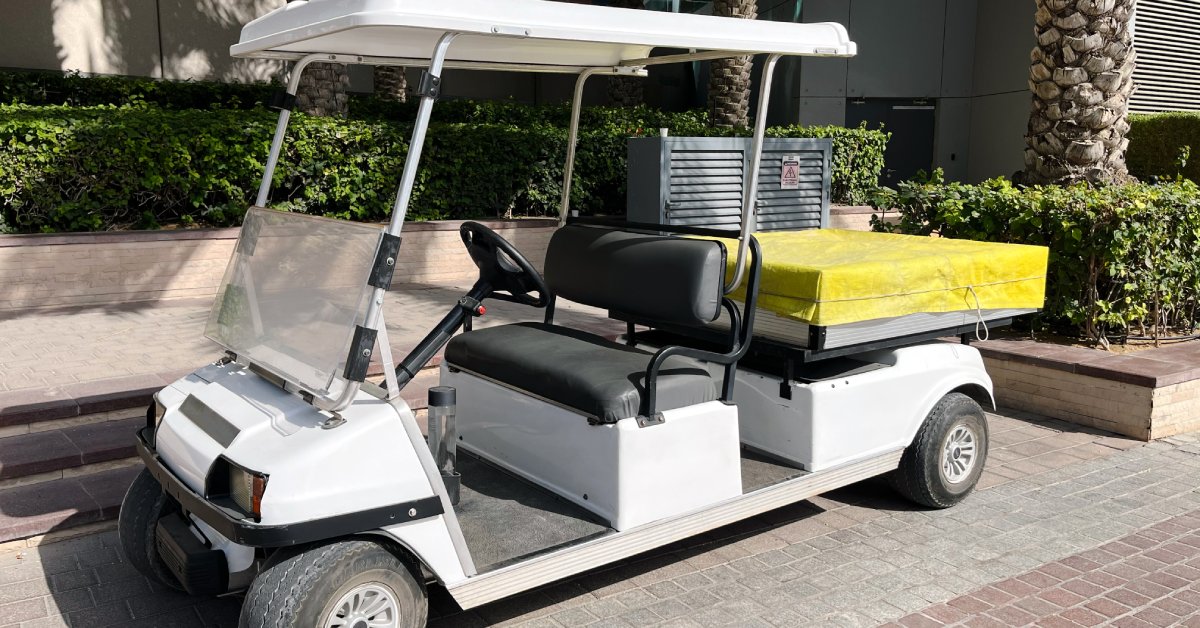
You should assess the materials you plan to haul around your property for safety. Loose items like gravel or mulch require a contained cargo box to prevent spillage. Secure larger, oddly shaped objects like branches or tools with straps for stable transport.
Different loads present unique challenges that necessitate specific solutions for secure movement. Solid items, such as firewood or bags of soil, require even weight distribution. Ensuring you have a reliable cart will help you handle diverse load types safely and minimize mechanical problems.
To maximize the hauling capabilities of your golf cart, consider equipping it with the following attachments and accessories:
You must always distribute the weight of your load evenly across the cargo area. An unbalanced load can compromise the cart's stability and make it difficult to steer. Place the heaviest items toward the center and low to the ground for safety.
Never let passengers ride in the cargo area or on a trailer while in motion. Secure all items so they cannot shift or fall out during the transport process. Safe operation practices protect you, your passengers, and the property around you.
Consistent maintenance ensures your golf cart remains in a safe and reliable operational state. Check the tire pressure and tread depth before you begin any hauling task. Proper tire inflation is essential for stability and correct load support.
Inspect the brakes, steering components, and battery connections on a regular schedule. A well-maintained vehicle performs better and reduces the likelihood of an unexpected mechanical issue. Follow the service schedule in your owner's manual for optimal vehicle longevity.
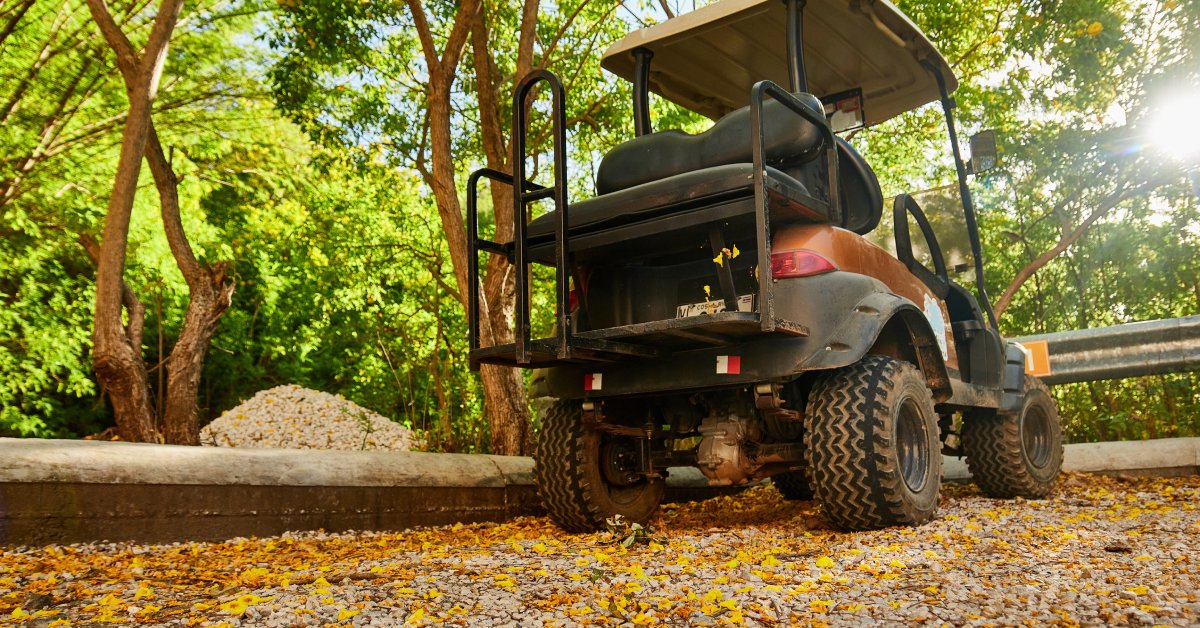
Map out the safest and most efficient path before you start to move a load. Avoid routes with sharp turns, steep hills, or very rough ground when you can. A well-planned route minimizes stress on the cart and makes the task much easier.
Consider any obstacles like low-hanging tree limbs or narrow passages along your path. Clear the route of any potential hazards to ensure a smooth, uninterrupted trip. Advance route plans contribute to safe and successful completion of your property work.
Adverse weather, like rain or high winds, can create hazardous transport conditions for you. Wet surfaces dramatically reduce traction, which makes it much harder to stop or turn. Reduce your speed and allow for greater distances for braking on slick ground.
Strong winds can affect the stability of a golf cart, especially with a tall load. You should postpone hauling tasks during severe weather to avoid unnecessary safety risks. Always check the forecast before you decide to undertake a substantial transport job.
Proper storage protects your golf cart from the elements and potential theft or vandalism. Keep the vehicle in a garage, shed, or under a protective cover after use. This practice preserves its condition and extends its overall functional lifespan.
If you have attachments, store them in a dry place to prevent rust or deterioration. Clean the cart and its accessories after use, especially after hauling messy materials. Good storage habits are an important part of responsible golf cart ownership and care.
One of the most important golf cart considerations for light hauls around a property is to check if the community has specific rules that govern the use of golf carts. Check with your local authorities or homeowners' association about any relevant ordinances. These rules may relate to hours of operation, speed limits, or required safety equipment.
Compliance with all applicable laws ensures you legally operate your vehicle. It helps to promote a safe environment for everyone within the entire community. Responsible use reflects well on you as a property owner and a cart operator.
Your golf cart can be a valuable tool for light hauling on your property. Success depends on an understanding of the vehicle's design limits and a focus on safety.
At Central US Golf Carts, we offer the best UTV golf carts for sale to help you complete property management tasks with ease. Proper maintenance, thoughtful planning, and careful operation ensure your cart serves as a reliable work partner for years to come.